I think that’s only half the truth. Even if we have to convert our entire energy supply, we will still have to import hydrogen, at least in Europe. We have as much sun here as they do in Mordor. So there will be massive shipments of ammonia from the south to us. Forty per cent is therefore probably a little too high
What does hydrogen have to do with the Sun? You can produce the energy necessary for electrolisis from many other sources. Also there was a plan to make a hydroduct from France to Spain to transport green/pink hydrogen.
It can be useful for transport or in some industries like steel industry where the alternative is burning coal or LNG.
And not all the solar fields and power plants are in use during the day. Some power plants like nuclear fission reactors can’t stop and relaunch that easily so they are used as the base, while renewables and gas are used according to demand because demand and power production have to be the same. So there are literally moments when solar and wind farms have to shut down during the day bc there is not enough demand for electricity. Using those timezones to produce hydrogen would be a good business
Insolation in Europe is hugely variable, depending on where you are. And that only matters for solar. It’s largely irrelevant for other renewables.
And there’s no compelling use case for hydrogen. It’s a not particularly efficient energy storage medium, with a number of negative attributes (high reactivity, high flammability, extreme proneness to leakage due to the extremely small molecule size). The only motivation for hydrogen is to keep carmakers and car-related supply chain going with minimal reconfiguration. Even then, the energy needed to produce hydrogen exceeds the energy released when it’s used, even without taking into account the energy and environmental costs of transporting it.
Did you perhaps mean hydrocarbons (organic compounds used for fertilizer and fuel) instead of hydrogen (most common element in the universe, 2/3s the atoms and 1/9th the mass of water)
We need sustainable energy storage, and hydrogen has few alternatives in this regard. However, the demand for green hydrogen can never be met by renewable energies in Europe. This means that it mainly comes from ships from sunny countries.
Hydrogen is terrible for energy storage, and even worse for energy transport. Especially if you’re doing electrolysis to split water that you then re-generate with atmospheric oxygen in order to produce electricity. A battery, flywheel, or just pumping water upstream gets you far better efficiency, and shipping literally any product of a hydrogen reaction is likely to be more efficient than shipping a heavy H2 tank back and forth.
Solar power in the EU seem to be increasing by 20% year-over-year. It’s hard to see a situation where shipping hydrogen to supply thermal energy to an existing factory would be cheaper than just building a local electrolysis plant and the necessary solar panels. (Unless, of course, you’re already invested or employed in selling hydrogen as a direct fossil fuel replacement.)
Theoretically, these are fantastic ideas for storing energy. Realistically, however, it is much more universal to run electrolysis. Many countries do not have mountains to build pumped storage facilities, and large-scale flywheels are difficult to implement. Battery farms are not sufficent.
However, the transport of electrons or hydrogen is already working today. Natural gas networks are in place and can be used. At the moment, expansion is faltering at the European Union and national borders.
In the long term, everything will come down to hydrogen and electricity, and this hydrogen will have to be imported


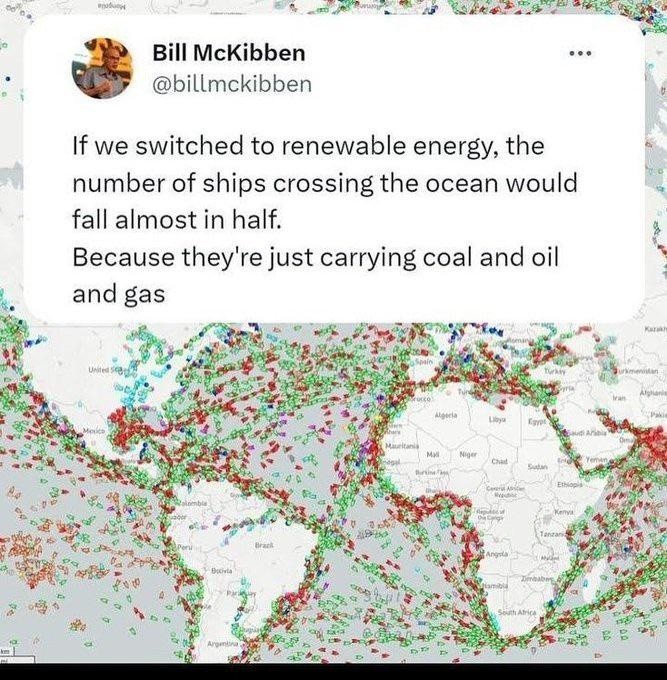
I think that’s only half the truth. Even if we have to convert our entire energy supply, we will still have to import hydrogen, at least in Europe. We have as much sun here as they do in Mordor. So there will be massive shipments of ammonia from the south to us. Forty per cent is therefore probably a little too high
What are yall doing with that hydrogen?
I think UK is blending it into their methane supply to reduce carbon emissions.
What does hydrogen have to do with the Sun? You can produce the energy necessary for electrolisis from many other sources. Also there was a plan to make a hydroduct from France to Spain to transport green/pink hydrogen.
And the energy used for that electrolysis is enerrgy that can’t be used for something more immediately useful.
There is no such thing as green hydrogen. It’s an energy sink. It’ll always be greener not to generate and use that energy at all.
It can be useful for transport or in some industries like steel industry where the alternative is burning coal or LNG.
And not all the solar fields and power plants are in use during the day. Some power plants like nuclear fission reactors can’t stop and relaunch that easily so they are used as the base, while renewables and gas are used according to demand because demand and power production have to be the same. So there are literally moments when solar and wind farms have to shut down during the day bc there is not enough demand for electricity. Using those timezones to produce hydrogen would be a good business
Insolation in Europe is hugely variable, depending on where you are. And that only matters for solar. It’s largely irrelevant for other renewables.
And there’s no compelling use case for hydrogen. It’s a not particularly efficient energy storage medium, with a number of negative attributes (high reactivity, high flammability, extreme proneness to leakage due to the extremely small molecule size). The only motivation for hydrogen is to keep carmakers and car-related supply chain going with minimal reconfiguration. Even then, the energy needed to produce hydrogen exceeds the energy released when it’s used, even without taking into account the energy and environmental costs of transporting it.
Did you perhaps mean hydrocarbons (organic compounds used for fertilizer and fuel) instead of hydrogen (most common element in the universe, 2/3s the atoms and 1/9th the mass of water)
We need sustainable energy storage, and hydrogen has few alternatives in this regard. However, the demand for green hydrogen can never be met by renewable energies in Europe. This means that it mainly comes from ships from sunny countries.
Hydrogen is terrible for energy storage, and even worse for energy transport. Especially if you’re doing electrolysis to split water that you then re-generate with atmospheric oxygen in order to produce electricity. A battery, flywheel, or just pumping water upstream gets you far better efficiency, and shipping literally any product of a hydrogen reaction is likely to be more efficient than shipping a heavy H2 tank back and forth.
Solar power in the EU seem to be increasing by 20% year-over-year. It’s hard to see a situation where shipping hydrogen to supply thermal energy to an existing factory would be cheaper than just building a local electrolysis plant and the necessary solar panels. (Unless, of course, you’re already invested or employed in selling hydrogen as a direct fossil fuel replacement.)
https://ember-energy.org/latest-updates/wind-and-solar-generated-more-power-than-fossil-fuels-in-the-eu-for-the-first-time-in-2025/
Theoretically, these are fantastic ideas for storing energy. Realistically, however, it is much more universal to run electrolysis. Many countries do not have mountains to build pumped storage facilities, and large-scale flywheels are difficult to implement. Battery farms are not sufficent. However, the transport of electrons or hydrogen is already working today. Natural gas networks are in place and can be used. At the moment, expansion is faltering at the European Union and national borders.
In the long term, everything will come down to hydrogen and electricity, and this hydrogen will have to be imported
It’s far cheaper to distribute energy via hydrogen than it is to distribute energy via electricity, especially over long-distance: https://docs.nrel.gov/docs/fy22osti/81662.pdf
We will likely make hydrogen where it is cheap, and then distribute via pipelines or other methods to where it is needed.