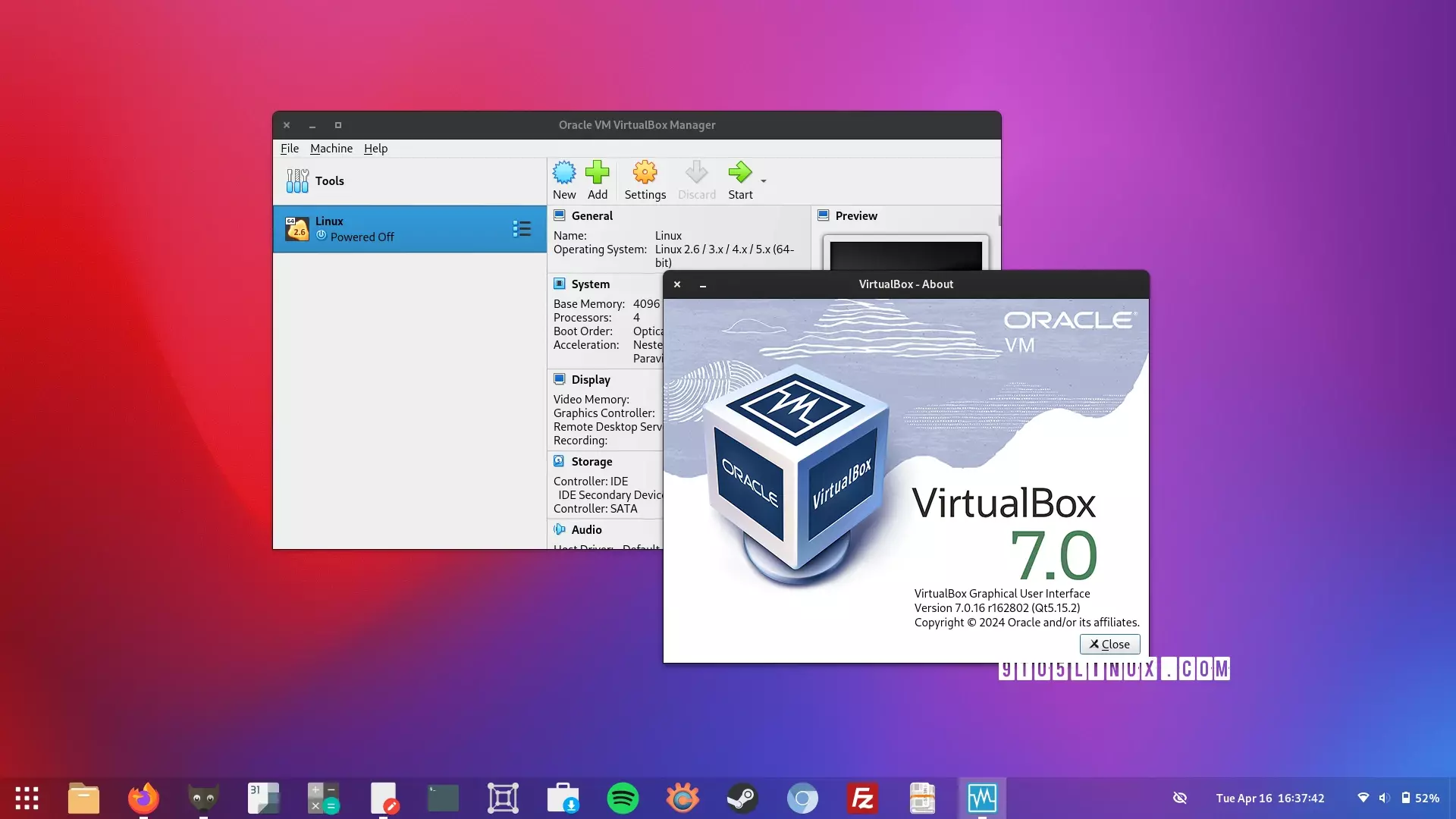
petsoi to Linux@lemmy.ml · 2 years agoVirtualBox 7.0.16 Released with Initial Support for Linux 6.8 and 6.9 Kernels9to5linux.comexternal-linkmessage-square55linkfedilinkarrow-up1177arrow-down16
arrow-up1171arrow-down1external-linkVirtualBox 7.0.16 Released with Initial Support for Linux 6.8 and 6.9 Kernels9to5linux.competsoi to Linux@lemmy.ml · 2 years agomessage-square55linkfedilink
minus-squarethingsiplay@beehaw.orglinkfedilinkarrow-up11arrow-down1·2 years agoQuemu+KVM is the way to go.
minus-squarePossibly linux@lemmy.ziplinkfedilinkEnglisharrow-up1arrow-down1·2 years ago*virtual manager Qemu is pretty much an emulator.
minus-squareProgrammingSocks@pawb.sociallinkfedilinkarrow-up1·2 years agoVirt-manager uses QEMU and KVM on the backend. The only difference is how you’re managing the VM.
minus-squarethingsiplay@beehaw.orglinkfedilinkarrow-up1·2 years agoQemu can also be used with KVM, without emulating the entire hardware. My preferred way to virtual machinery. From linux-kvm.org: The kernel component of KVM is included in mainline Linux, as of 2.6.20. The userspace component of KVM is included in mainline QEMU, as of 1.3.


Quemu+KVM is the way to go.
*virtual manager
Qemu is pretty much an emulator.
Virt-manager uses QEMU and KVM on the backend. The only difference is how you’re managing the VM.
Qemu can also be used with KVM, without emulating the entire hardware. My preferred way to virtual machinery.
From linux-kvm.org: