


- cross-posted to:
- gaming@beehaw.org
2025 has probably been the best year for Linux that I can remember, at least from the perspective of general PC users. It’s had tons of publicity as a viable alternative to Windows, even, and perhaps especially for gaming. I switched to it myself earlier this year, but I’m back on Windows and I don’t think I’ll be switching back to Linux properly any time soon.
The Linux hype this time was precipitated by Valve’s Linux-based operating system, SteamOS, opening up for use on other handhelds than just the Steam Deck. That had been long on the cards, but it finally started seeming close at hand early on this year.
SteamOS has shown what Linux can be capable of for gaming in large part because of Proton, the compatibility layer Valve employs to translate Windows commands into ones that Linux can understand. It’s a fork of WINE tailored towards gaming, created and maintained by Valve specifically for that purpose.
Over the years, Proton has gotten so good that compatible games tend to run flawlessly. Valve has an incentive to ensure this is the case, as a great gaming experience on SteamOS via Proton makes for more Steam Deck and Steam Store sales.
The development and improvement of Proton has been a massive part of what’s made Linux distros genuinely viable for gaming. And yes, I said “distros”, plural, because any distro can use Proton, as it’s built into Steam for Linux. It’s not just a SteamOS thing.
(Image credit: Future)
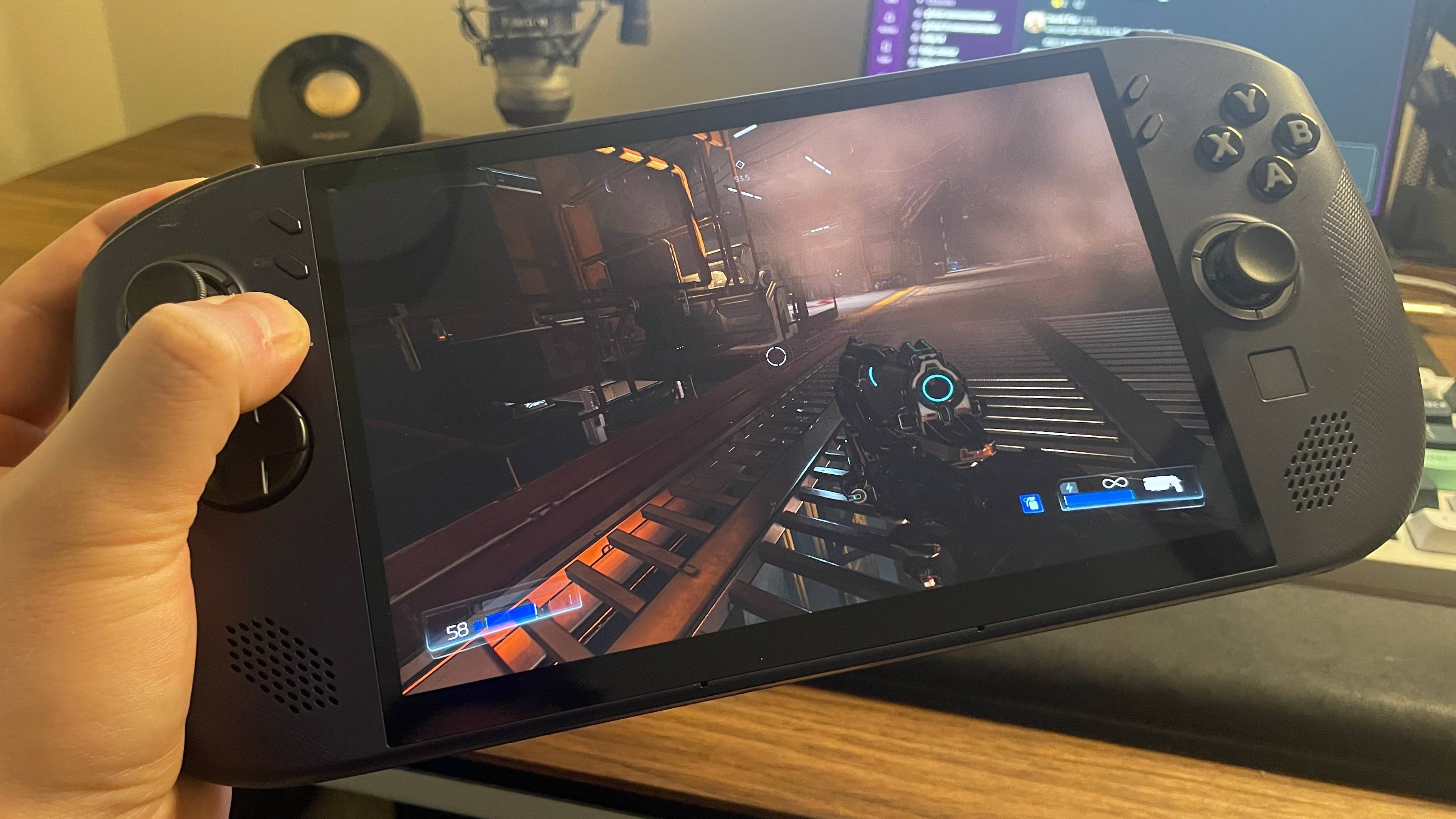
The recent popularity of SteamOS in particular, though, was spurred by the Lenovo Legion Go S, which Valve and Lenovo had been collaborating on to make the first third-party SteamOS handheld. But even before the SteamOS version of the Legion Go S launched, some handheld gamers started manually downloading and installing the Steam Deck’s recovery image of SteamOS on their own handhelds.
I tried this out myself with the initial Windows version of the Legion Go S and was very impressed. Performance is better, as is sleep/resume functionality, and of course the overall full screen UI is much nicer. There are downsides, such as lack of support for some games, but any game I’ve wanted to play on handheld has worked just fine, so I’m happy sticking with SteamOS for gaming on handheld.
Then the official SteamOS version of the Legion Go S actually launched, and that’s been one of the most popular choices for a handheld gaming PC ever since. Of course, that’s not all down to SteamOS, as the device itself is stylish, comfy, and pretty powerful, but the Arch-based OS does play a part.
Other handheld users haven’t been content leaving Legion Go S and Steam Deck gamers have all the fun, either. Even our own hardware commander-in-chief Dave has tried SteamOS on a bunch of devices—Ayaneo Kun, OneXPlayer OneXFly, OneXPlayer X1, OneXPlayer OneXFly F1 Pro.
However, every time he tried it, it was a buggy experience, if not completely unworkable. Apart from the Framework 13 laptop, that is, which he found runs the OS just fine—better on a laptop than multiple handhelds, go figure. Using Bazzite, a third-party Fedora-based SteamOS-alike, is also an option, and that seems to be a less buggy experience than SteamOS for most people, but it’s still not perfect in all cases. The Steam Deck and Legion Go S running SteamOS still seem to be the only handhelds that can run a SteamOS or SteamOS-like experience pretty flawlessly.
Despite this very limited expansion of the operating system, Linux still ended up getting a lot of attention as more and more people realised that it’s a viable alternative to Windows, even for use cases such as gaming. We had YouTube influencers talking about it, sister publications, and even—quietly, very quietly—yours truly.
My own recent foray into Linux was very short-lived, however. I’ve dipped into Linux many times over the course of my life, but I’ve never stuck with it, and this time I was punted back over to Windows with undue force. You can read the full story explaining why here, but the long-story-short is it just completely broke—trackpad, Wi-Fi card, the lot—while I was working away at Gamescom, and I didn’t have the time or patience to troubleshoot and fix it.
Unless kernel-level anti-cheats stop being used, there’ll likely always be a reason for some gamers to stay on Windows
A frantic Windows install was my solution, and the experience has traumatised me enough that I’m reluctant to give Linux another go, at least not on a machine that I depend on for work. I’d experienced troubles that made me consider abandoning Linux prior to this—Nobara Linux didn’t seem to gel with my laptop’s hybrid graphics and external monitor—but my complete disaster at Gamescom solidified things.
Still, that was just my own experience, and the hype was still there for Linux as the year went on. Whether that was from influencers and publications capitalising on the hype by generating even more hype, or whether it was real enthusiasm, it doesn’t matter: it was there.
That was finally compounded by two things: Windows 10 coming to its end-of-life (EOL), and Valve’s announcement of the Steam Machine. In the former case, the kind-of-but-not-really EOL date for the previous Microsoft operating system brought to the forefront all the disappointing things about Windows 11. And in the latter case, well, the hype speaks for itself: people want a SteamOS desktop, assuming the price is right.
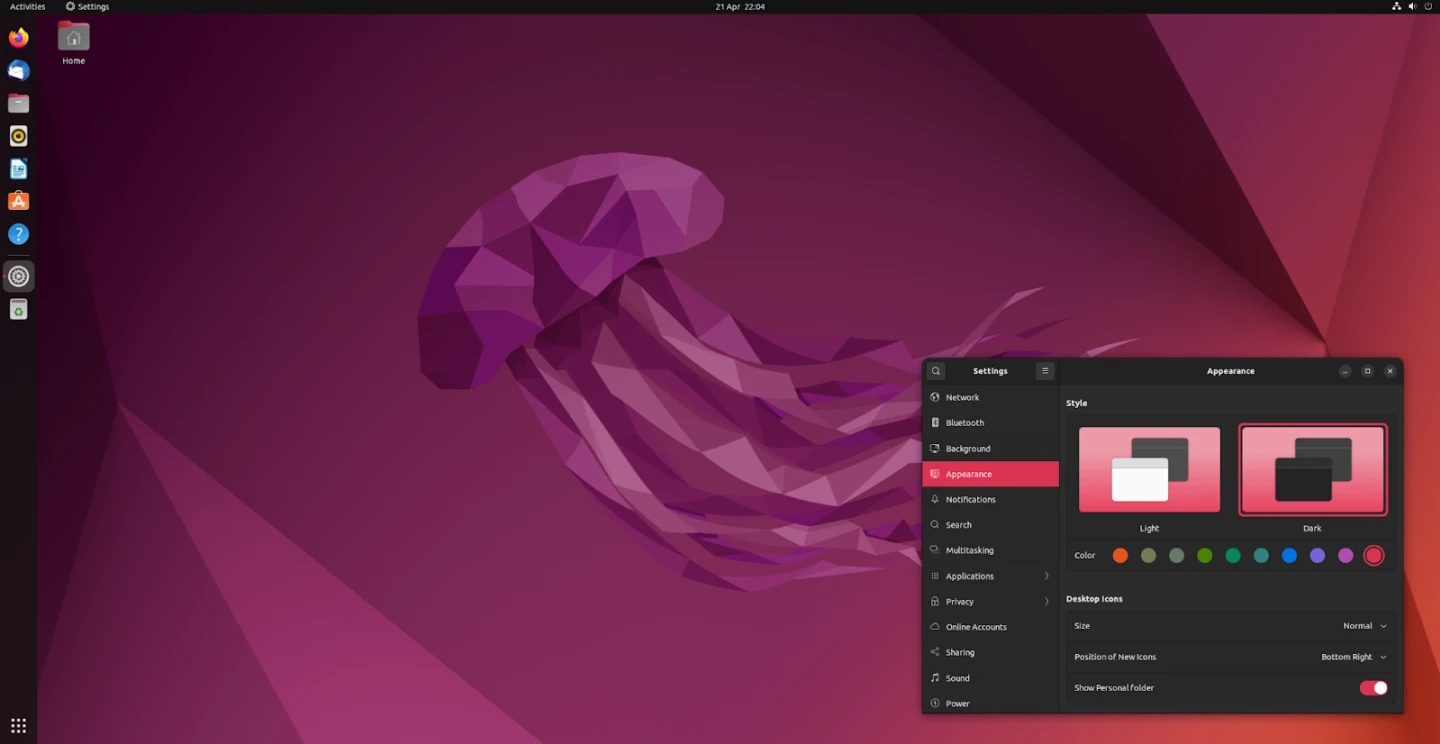
A screenshot of the Ubuntu 22.04 LTS desktop. (Image credit: Canonical, Ubuntu)
It’s not all about SteamOS, of course. Linux in general has seemed mighty appealing; it’s just that SteamOS has shown that gaming is genuinely possible and can in fact be better than Windows gaming in most cases.
The freight train that is random AI features, with a target market of questionable existence, has ploughed on through 2025’s Windows 11 updates. All the while giving us a million and one things that, I don’t know about you but I certainly never asked for. Linux, on the other hand, delivers the same message it always has: your system, exactly as you want it, to do with as you will. And with Proton delivering a good gaming experience, what’s not to love?
Thus, 2025 has most certainly been quite a year for Linux. But I’m still not switching.
The looming scythe of unpredictable hurdles is one reason I’m not switching over
The looming scythe of unpredictable hurdles is one reason I’m not switching over. There’s another reason, though: anti-cheat software.
It’s no secret that I’m a big multiplayer gamer. The first games I played were Team Fortress 2, Counter-Strike Source, and Call of Duty 4. Then there was Starcraft 2, World of Warcraft, Quake Live, Overwatch, and on it went up to today, where my mainstays are still online games.
Go back a decade and Linux might not have had such a problem with online games, specifically. Sure, general game compatibility was much more of an issue back then given there was no Proton, but anti-cheats probably wouldn’t have posed such a problem. However, over the last few years, more and more games have started using kernel-level anti-cheats, and these are a complete no-go for Linux.
Kernel-level anti-cheats run at the deepest layer of your operating system, meaning they can prevent cheats running at a deeper layer than most cheats operate at, making them more effective. The problem with this is that it’s giving the anti-cheat access to a layer of your system that risks opening it to some pretty bad vulnerabilities if it’s not done properly, and it just doesn’t sit right with some people to give software such deep control over your system.

The Convergence wallpaper as used in the Linux-based gaming OS, Bazzite (Image credit: Bazzite)
Regardless of that debate, though, we’ve been told for a long while that such anti-cheats are here to stay. And it looks like that’s true, at least for the foreseeable future, because more and more games have started to use them, from Apex Legends, to Fortnite and Valorant.
Linux distros, however, don’t support kernel-level anti-cheats. Linux allows users to fiddle around with pretty much anything they want, including the kernel, so there’d be little point in adding anti-cheat to the Linux kernel because, unlike with the Windows kernel, the user might be able to patch in code that makes the anti-cheat ineffective anyway.
A proper kernel-level anti-cheat on Linux isn’t in principle impossible, but there’s little incentive for Linux devs to make it work. Plus there are other problems, such as that anti-cheat makers don’t want to make their code open-source, and the core Linux kernel is open-source.
It’s unlikely that many game devs will abandon kernel-level anti-cheat, either. We’ve seen, for instance, Facepunch (of Rust fame) COO Alistair McFarlane say that “if a game supports Proton or Linux, they’re not serious about anti-cheat” because “it’s a vector for cheat developers.”
So, unless kernel-level anti-cheats stop being used, there’ll likely always be a reason for some gamers to stay on Windows. I don’t think this problem is confined to people just like me who primarily want to play competitive multiplayer games, either. That’s because even people who only play singleplayer games might want the option to branch out in future. Battlefield 6, for instance, has a kernel-level anti-cheat, and that game’s been massively popular even with people who might not have normally considered playing such a competitive multiplayer game. It’s probably been popular with some who don’t play many other multiplayer games at all.
(Image credit: Are We Anti-Cheat Yet - areweanticheatyet.com)
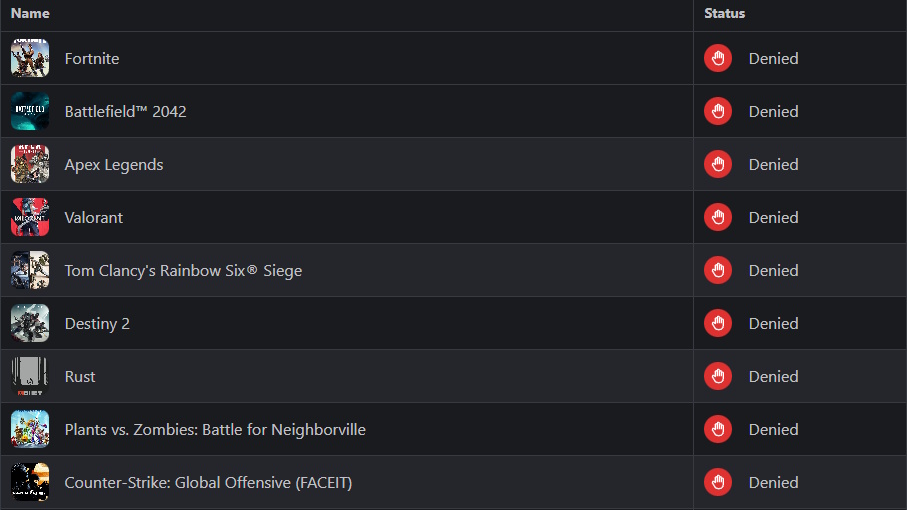
The list of incompatible games—which you can find on AreWeAntiCheatYet.com—isn’t massive, but it’s hardly restricted to a few niche games. There are some big hitters there, and there’s always the risk that big future games you might want to play will employ a kernel-level anti-cheat, too.
This problem, in some ways, is similar to the bugginess problem I spoke about earlier. Both issues are ones that can interfere with your peace of mind, leaving you wondering whether all the games you might want to play will just work. There’s much less peace of mind with Linux in that regard than with Windows, and I don’t see that changing any time soon.
So, for as good of a year as 2025 has been for Linux, I don’t think it will lure a great many more gamers in than before. At least, not as a full platform switch. I can see some gamers trying out dual-booting, myself included, and I can certainly see some trying out the upcoming Steam Machine, but not as a replacement for a Windows desktop or laptop.
This could all improve over time, of course, and I hope it does because the level of user control you get with Linux is very appealing. For that to happen, though, I think there would have to be some alternative to kernel-level anti-cheats come to fruition, and the level of out-of-the-box reliability of Linux distros, drivers, and software, would have to continue improving. I just don’t think we’re anywhere near that tipping point, yet.
From PCGamer latest via this RSS feed