
23·
26 days agolol, ok. I’m not interested in people who are not interested in learning, or listening. So peace out.
lol, ok. I’m not interested in people who are not interested in learning, or listening. So peace out.
Blaming “protest‑non‑voters” for ICE brutality misses why Kamala Harris lost the 2024 election, and why Democrats keep failing vulnerable communities.
Yes, Gaza cost Harris votes: about 422,000 Democratic‑leaning voters stayed home or voted third‑party, with roughly 122,380 directly linked to protest (Al‑Shabaka). But protest voters were a smaller factor compared to the 6.8 million former Biden voters who switched sides or stayed home due to broader campaign failures (Common Dreams).
The Democratic Party’s own autopsy points to larger failures: voter disenchantment as millions switched sides or stayed home, a chaotic primary process, abandoning the working class to court Republicans and donors, alienating young and minority voters over Gaza and the economy, and losing Black and Latino voters who shifted toward Trump (NPR).
ICE brutality isn’t a Trump‑only problem. Obama deported a record 2.7 million people (Migration Policy Institute). Biden’s Title 42 expulsions removed over 2.5 million migrants without asylum hearings (PBS NewsHour). The agency’s culture of violence was built by successive administrations.
When we blame individuals who refused to vote for a candidate supporting genocide, we ignore why Democrats offered such a candidate. The answer isn’t that voters failed the party, it’s that the party failed voters. A political machine funded by corporate donors cannot deliver protection for vulnerable people.
If we want to stop ICE brutality, we need to confront the system that produces both Republican and Democratic presidents who expand its powers. Focusing on “protest‑non‑voters” lets that system off the hook.
@andyburke@fedia.io
@Emotional@lemmy.blahaj.zone
@NaibofTabr@infosec.pub
@ajmaxwell@lemmy.world
@frustrated_phagocytosis@fedia.io
@Two_Hangmen@midwest.social
@CuddlyCassowary@lemmy.world
@cannedtuna@lemmy.world
@writingcheques@lemmy.world
@nohbdyuno@sopuli.xyz
@ohellidk@sh.itjust.works
@Darkassassin07@lemmy.ca
@BassTurd@lemmy.world
@cass80@programming.dev
@regedit@lemmy.zip
@CoolCat@lemmy.world
Curious if any of you could do a better job of explaining this persons position here.

Yeah, it’s not about mining at all. Somalia doesn’t have major US mining ops, but it’s strategically crucial for three big reasons:
Somalia controls the Bab el-Mandeb Strait, where 10% of global trade passes (Al Jazeera, Feb 2026). Keeping that sea lane open (and under US influence) is a top priority for the Pentagon.
Camp Lemonnier in Djibouti is the only permanent US military base in Africa (Manara Magazine, July 2025). Having an unstable Somalia next door justifies keeping that base open and lets the US monitor rivals like China (which has its own base in Djibouti) and Turkey (which just built a naval base in Mogadishu) (ISSF, Nov 2025).
Turkey discovered about 20 billion barrels of oil there last year (Somali Guardian, May 2025). The US wants to make sure rivals don’t lock down those resources and that any future development happens under a US‑friendly security umbrella.
The “counterterrorism” justification (al‑Shabaab/ISIS) is the public face, they’ve already hit Somalia 47 times this year, on track to break last year’s record of 124 strikes per the above article. The administration now frames the groups as a potential “homeland threat” to justify the escalation (CTC Sentinel, July 2025). But the real drivers are securing that vital choke point, maintaining the base, and checking China/Turkey/UAE influence in the Horn.
Sudan’s different because the RSF is backed by UAE/Saudi, who are US allies. The US isn’t going to bomb its partners’ proxies. Religion isn’t the deciding factor; it’s who’s aligned with whom in the regional power game.
Hezbollah’s been hitting back with a mix of rockets, drones, and artillery, mostly targeting northern Israeli communities and troops. Here are some specifics from the last few days:
Rocket attacks: On March 22, Hezbollah fired a rocket barrage at the northern Israeli community of Misgav Am, killing one person (Al Jazeera). That same day, they launched 85 attack waves, the highest single-day total since the conflict began, with the majority being rockets/missiles (Alma Research).
Drone (UAV) strikes: In those same 85 waves, 18 were carried out with offensive drones. They’ve also used anti-aircraft missiles against Israeli drones (Alma Research).
Targets and tactics: Their operations are focused on Israeli military gatherings, armored vehicles, and bases along the border, as well as towns in the Galilee. On the ground, they’re using anti-tank guided munitions and artillery to resist Israeli advances into southern Lebanon (The Guardian).
Scale: Since the latest round of fighting began on March 2, over 865 attack waves have been recorded, showing they’re prepared for a sustained conflict (Alma Research).
So, beyond the general statement in the article, the retaliation has involved specific, daily attacks with a variety of weapons, causing casualties and keeping pressure on Israel’s northern border.
You should watch the video.
This man is a demon, it is true, but you can do better than using a misogynistic slur, come on now.
Serious purity testing here. What he actually says:
I’m transphobic!
This all seems very reasonable and fine. I’d vote for him.

Maybe Kamala Harris should have read the fucking room.
So, a lot of words to cover one basic idea.
What is the basic idea?
You have no current alternative to the Dems.
If dem voters think Newsom is a bad candidate, then what should the dems do?
But yes, you attacking me will certainly get those low information voters to fly to the polls.
The dems sure don’t care about getting them to fly out to the polls.
Do you really hear yourself when you type these words out? I really want to understand. Do you not see what the Democratic Party analysts are saying? People turned away from the Democrats because they were unconvincing. The Democrats did not present themselves as the realistic choice to the people who mattered. Again, new voters broke for the Republican Party for the first time. Why did they do that? Why did Harris not capture new voters? Third party voters did not change the outcome of the election, that is not what the data shows. Why are you even talking about them? Why did Harris fail to capture the “politically disengaged and ideologically heterodox, aka low-information voters” who decided to stay home? Those people didn’t even bother voting, they didn’t vote for third parties, the system failed them and they stayed home. From the Vox article [emphasis mine]:
Taken together, all these figures paint a disconcerting picture for Democrats. The party has long wagered that time was on its side: Since America’s rising generations were heavily left-leaning — and the country was becoming more diverse by the year — it would become gradually easier for Democrats to assemble national majorities, even as the party bled support among non-college-educated white voters.
And it’s true that Democrats still do better with young and nonwhite voters than with Americans as a whole. But the party’s advantage with those constituencies has been narrowing rapidly. Last year’s returns suggest that demographic churn isn’t quite the boon that many Democrats had hoped, and can be easily outweighed by other factors. Meanwhile, as blue states bleed population to red ones, Democrats are poised to have a much harder time winning Electoral College majorities after the 2030 census [but don’t forget, Trump won the popular vote in 2024 as well]. Given current trends, by 2032, a Democratic nominee who won every blue state — and added Michigan, Wisconsin, and Pennsylvania — would still lose the White House.
How Democrats can arrest the rightward drift of young and nonwhite Americans — while broadening their geographic base of support — is up for debate. But pretending that the swing electorate does not exist, or that unreliable Democratic voters are all doctrinaire progressives, probably won’t help.
I’m not sure what you’re arguing about at this point. The Democrats did not present themselves as the obvious choice. Voters did not see Democrats as the obvious choice. Democratic Analysts have shown, through their own analysis of millions of records and data points, that this election was lost do to a failure to capture demographics The Democrats have historically won. This is a failure of the party and their campaign, a failure of the message, and of the candidate.
If you are not going to seek out why this failure happened, then you are doomed to continue to fail.
The Democrats can never fail, they can only be failed. You can spend billions on a campaign and yet it’s the constituency who needs to have done more. Pathetic.
Who was supposed to push hard for her? Also you can admit you were wrong you know.
The data actually disproves the “people stayed home because they wanted something better” theory.
According to Blue Rose Research (which conducted 26 million voter interviews), roughly 70% of the Democratic vote share drop was due to people changing their minds and voting for Trump, not staying home. Only 30% was due to turnout.
Catalist (the Democratic party’s own data firm) found something even more damning: For the first time in their dataset, new voters broke for the Republican. Harris only won 48.5% of first-time voters. These weren’t leftists demanding a purity test-they were mostly young, diverse, and working-class people who decided Trump’s message on the economy resonated more.
The voters who did stay home? They weren’t hardcore progressives. They were “politically disengaged and ideologically heterodox”, aka low-information voters who didn’t feel motivated by either candidate. That’s a persuasion failure!
It was a campaign that failed to differentiate itself from Biden, chased Liz Cheney Republicans instead of union workers, and watched 79% of economy-first voters go to Trump.
Harris lost because she couldn’t convince people she’d change anything. That’s on the campaign, not on voters for wanting “something better.”
Vox had a whole write up on it: https://archive.is/20250602132021/https://www.vox.com/politics/414370/2024-election-results-exit-polls-catalist
Ah I see what happened. I merged a large code reorganization and it had a bug in it that I had resolved after the branch was created. I’m working on pushing the fix now and I can purge the dupes after. Thanks for the heads up!
















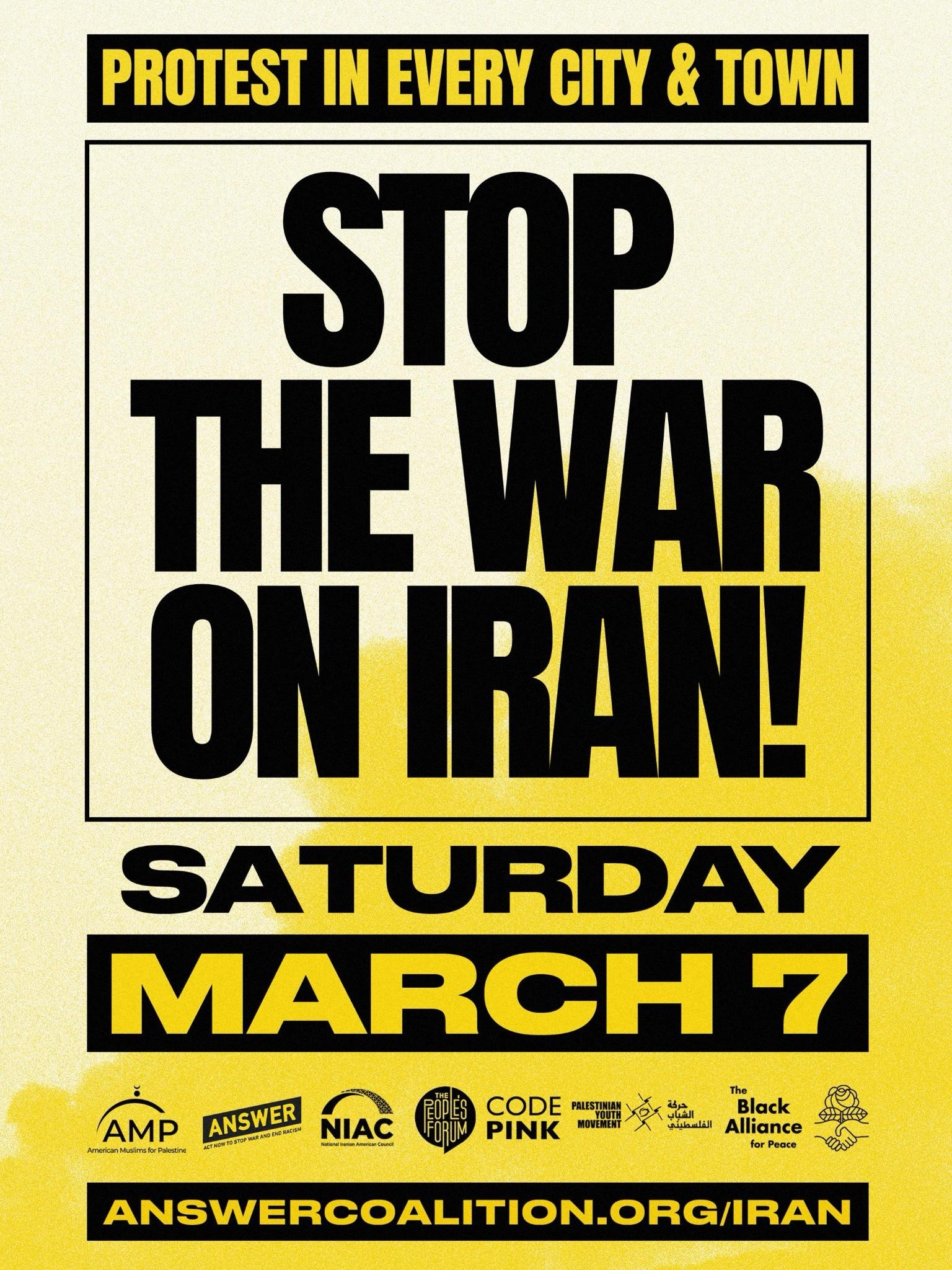

Thanks for the heads-up. I’ve updated the story with the body text from the site.