

36·
1 day agoIf she wants to win, she needs to be out there today pushing back against the regime. Instead, there’s crickets. That’s a “No” vote from me.
If she wants to win, she needs to be out there today pushing back against the regime. Instead, there’s crickets. That’s a “No” vote from me.

If she wants to win, she needs to be out there today pushing back against the regime. Instead, there’s crickets. That’s a “No” vote from me.

We should pretty much assume that all age verification efforts either currently are feeding into surveillance efforts, or will be bought out by surveillance companies.

I’m currently listening to Todd Purdum’s Desi Arnaz: The Man Who Invented Television. This comes after listening to Love, Lucy by Lucille Ball and A Book by Desi Arnaz. It draws very heavily from Arnaz’s book, but also adds additional bits of context. I’ll probably be looking for another book on the history of television (and likely radio), probably on the development of the various networks.
My previous book was Sophie Aldred’s Doctor Who: At Childhood’s End. I have to confess I haven’t watched the Sylvester McCoy episodes in a long time, and dropped off watching NuWho shortly before Jodie Whittaker took over, but the book is thorough and engaging, and delves much more into character relations than a lot of Doctor Who books (that, plus their tendency to not have a lasting impact) is a reason I tend not to read many of them, but this was a worthwhile read, and I enjoyed the writing.
Before that was Robert Heinlein’s The Door Into Summer. It’s an engaging enough time travel(ish) book, but … what? After much time travel, various shenanigans and all the characters aging by various methods, the hero ends up marrying his business partner’s daughter, whom he had met and established a friendship with when she was 11 years old, and whom he doesn’t seem to have had much significant contact with later on. I may not be doing it justice, but that part kinda gave me the ick.
Before that was Me by Elton John. It was an interesting account of his life and the various advances they made in music, but not a lot of it has stuck with me. It did made me grab a couple books about Harry Nilsson, which are now on my TBR pile.
I have no idea how they’re going to fit into my Bingo card, but I’ll figure that out closer to the date.

The guy before me said what she did “was pretty fucked up”; I’m saying there are multiple sides to this story, and we know pretty much none of them. I’m saying that she stayed with him for 20+ years and there’s must’ve been a reason she left when she did.
Back in 2001? I lived in semi-rural Maryland and our grocery stores were open till 10, or midnight if you wanted to drive to the nearest “big town”, and there was a 24-hour Walmart about 45 minutes away. I can’t speak to Kmart - there wasn’t one in my area - but I wouldn’t be surprised if her stores stayed open later as well.
Edit: also, regardless of normal store hours, this was a couple weeks before Christmas, so extended hours could definitely be in play.
I’m wondering what the husband was like.

“We just want to be treated like people with rights,”
If there is one person without rights, then nobody has rights. But I’m not sure you’re smart enough to learn that lesson.

His death is the first homicide in ICE custody in recent history
Press [X] to doubt.
ICE officials wrote in that report that while detained at Camp East Montana, Lunas Campos received “regular” medical evaluations
Press [X] to doubt.
Lunas Campos’ death “is still an active investigation, and more details are forthcoming,” the spokesperson said.
Translation: This is the least-damaging version we can use as an explanation, given the facts that the public currently knows. However, we reserve the right to change our story if additional information get leaked.
The federal government tried to deport the six detainees who witnessed the final moments of Lunas Campos.
The actions of a totally innocent bureaucracy, definitely not panicking …
The whereabouts of those witnesses are currently unclear
Yeah, I’m going to guess it’s not anyplace good.
Only after the [public] medical examiner advised his family that it might be a homicide did ICE officials allege a suicide attempt. […] Eleven days after Lunas Campos’ death, 36-year-old Victor Manuel Diaz marked the facility’s third fatality. ICE sent Diaz to a U.S. Army hospital rather than the local medical examiner, where a military spokesperson said that the agency would not make his autopsy public.
So there’s an ongoing cover-up in this third [known] death, got it.
Fuck ICE.
deleted by creator

A smart lamp?
Eh, I have some smartbulbs around the house. I have one upstairs and one downstairs that automatically turn on around sunset and turn off around dawn: I want my elderly pets to be able to navigate safely to get to wherever they want to be. I have a couple other smartbulbs installed in the two places that are often accidentally left on and that we had to make special trips to turn off when we were going to bed. And I’ve set timers on some of them to go on and off randomly when we’ve gone on vacation. So I can understand the basic use cases.
But the thing is, we’ve done all that without needing a special “lamp” to handle that for us. I’m not sure what market the lamp will be targeting.
[some brain-damaged speaker for the Kennedy Center said] “The Democrats have been calling artists urging them to cancel and attacking the Center non-stop.”
Uhh, no, we haven’t.
[And also added] “Commonsense Democrats must speak up before this violence takes a life.”
Someone needs to send them that analysis of where almost all the political violence in the US originates from.
first reported by Fox News
Of course it was …
The USPP Major Crimes Unit is reviewing security footage and investigating
Does the Major Crimes Unit not have, y’know, some actual major crimes to investigate?

TIL - thank you!
Also, Dumas based D’Artagnan from The Three Musketeers and it’s sequels (the last of which was The Man in the Iron Mask) on an account of the life of Charles de Batz de Castelmore D’Atagnan, later Captain in the Musketeers and also for a time Governor of Lille.
You know how, if you fall for one scam, they trade/sell your info to other scammers because they know you’re likely to fall for something else as well? That’s how I feel about these people: they may (eventually) leave the trump train, but they’ll be ripe pickings for someone else.
Also: no tariffs!
The ruling only applies to tariffs he justified with the 1977 Emergency Act; the rest remain in place.

It’s not all the tariffs, just the ones he justified using the 1977 Emergency Act. So of course, now he’ll use another justification, and it’ll take SC®OTUS another year to rule on those.

Obama’s election broke brains on the right; Trump and the pandemic made their position intractable.

sigh. Yet another “journalist” sourcing stories from /r/popular.

DinoCon has named several paleontologists and researchers who had links with Epstein after his conviction. And they’ve also banned the directors of various institutions that have continued to maintain ties with those people.











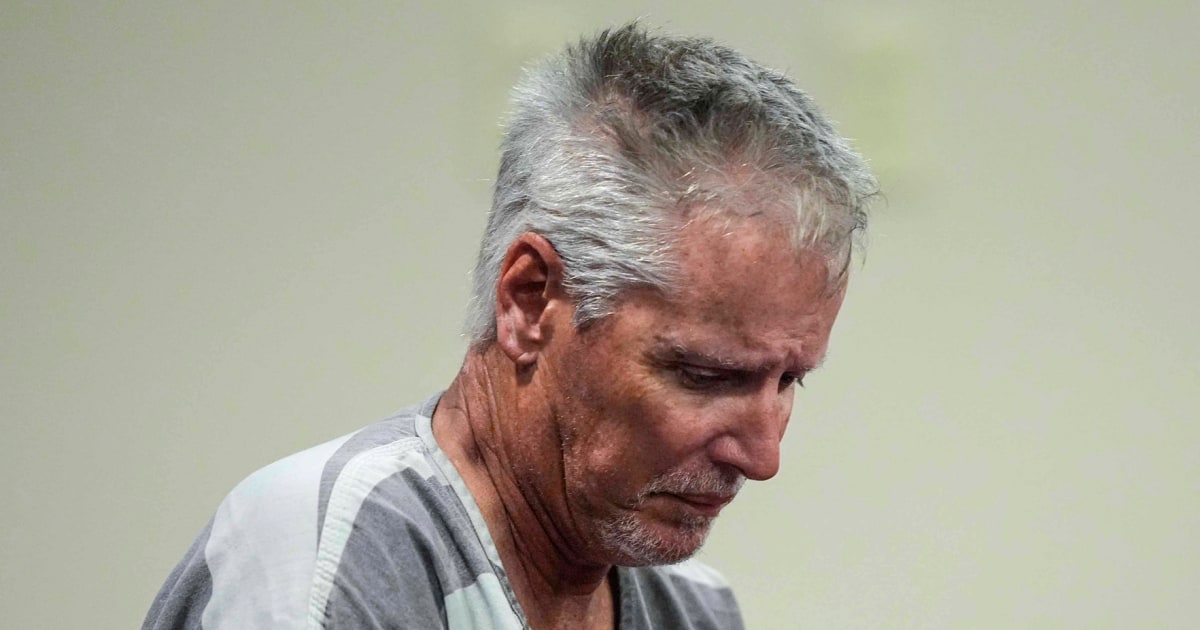

Might’ve only had to be on the registry for a few years?
Anyway, here: https://web.archive.org/web/20050706062151/http://www.suntimes.com/output/news/cst-nws-molest01.html