
Hey now, someone doesn’t need to be an abusive piece of shit to get a gummy. They could just really be into grandma.
- 8 Posts
- 2.97K Comments
Joined 3 years ago
Cake day: July 31st, 2023
You are not logged in. If you use a Fediverse account that is able to follow users, you can follow this user.

 9·5 days ago
Let me get this straight: Windows 11 already artificially delays launching your chosen start-up programs, but now Edge will open itself immediately on startup?
Great job, Microsoft. Keep having your cake and eating it. It’s not like Windows 11 is already hemorrhaging its userbase to Windows 10 or anything.
 10·5 days ago
Valve HATES this ONE TRICK to DOUBLE YOUR FPS INSTANTLY!
- Render scene to texture
- Copy texture to frame buffer, present it, wait for vblank (x2)
- Repeat from step 1.
 4·8 days ago
Authoritarians need to project an appearance of peerless strength, intelligence, and infallibility. The people who fanatically believe their policies will directly lead to what was promised aren’t doing it on the basis of those policies, but instead on the trust of the confident strongman who made them.
I have tried it multiple times over the years and I did not have great luck with things “just working” as everyone claims.
This is why I don’t like recommending LTS distros for anything other than servers. The Linux kernel and desktop software moves fast these days, and running 2 year old kernel and DE means missing out on the fixes and improvements that the “it just works” people are talking about.

Oh god, no. Are you trying to drive people away from using Linux?
 2·13 days ago
Most people with that little money aren’t going to go out of their way and assume the risk of investing in new ventures. They’re going to put it in some managed or unmanaged fund recommended by someone else, and that money is going to be invested in something safe and presumably profitable on an infinite time scale, like a megacorp (or 500).
It would amazing if the everyday worker’s savings went towards aiding the local community in starting new businesses, but I wouldn’t count on that being the default.
 38·13 days ago
Naw. Wear that shit with pride, then take a Snoop-level rip from a bong.
 7·13 days ago
There’s no lack of evidence for the MyPillow guy, that’s for sure.
 271·17 days ago
Time to invest in ivermectin suppliers.
 16·17 days ago
The typical conservative response to that is “but then they’ll take their businesses elsewhere and now you get nothing.”
The typical conservative response also fails to even consider just how difficult, expensive, and risky it is to move a large business to an entirely new region. Real estate has to be purchased and sold, employees have to be relocated or replaced, logistics have to be established in the new region, valuable business connections and contracts will have to be severed, and for brick and mortar businesses, the competitive landscape will be different.
 3·17 days ago
Legal, probably. Whichever corporations push that hypothetical bill are going to write it very specifically to ensure that it excludes their use cases.
Here’s an example of how they could do it:
S.A.V.E.K.I.D.S:
Support Age Verification Environments Keeping Internet Detectable SignalsBlah blah pretext and background information…
Blah blah surface-level purported reason for the bill is to prevent kids from bypassing age verification checks by using a VPN to pretend they’re a resident of another country…
No entity operating in or doing business within <jurisdiction> may provide services or make available technology that irreversibly redirects, masks, or otherwise obscures internet-destined traffic to appear as originating from any source other than the internet-connected network in which it was generated.
Site–to-site VPN? Fine, it’s destined for the intranet.
NAT? Also fine, it is the originating internet-connected network.
HTTP reverse proxies? Still fine, they pass the origin IP along.VPN that routes all traffic through it? You’re getting locked up and they’re throwing away the key.
“New legislation mandates that we no longer offer the VPN connections necessary for our remote workers to access the company intranet off premises. Starting immediately, all employees are to return to office 7 days a week. If this does not work for you, please reach out to HR and they will accept that as your resignation in lieu of a written document.”
— Meta (the corp pushing the age verification laws), probably.
 8·18 days ago
I was being sarcastic by the way.
Anyone with a shred of humility and critical thinking skills should realize that cutting corners to chase short term profit is being “penny wise, pound foolish”.
For the well-connected, that doesn’t seem to be necessary to fail upwards into leadership positions, unfortunately. Even ignoring the glaring orange example, there are people like John Riccitiello who managed to skull-fuck the reputations of both EA and Unity and still walk away with a new job lined up.
Right, but you’re not thinking like a MBA.
It hasn’t happened yet, historical trends suggest it won’t happen, and more importantly, that’s perfectly good profit going out the window. The shareholders will be pleased to know that we reduced operating costs by 10% this quarter, and I’ll reach the target for my bonus.
 5·18 days ago
There’s a few of them. Notably, the guy who didn’t care that AI art is built on the back of copyright violations getting pissy about his AI-generated art not being eligible for copyright.
But more importantly here, I don’t think most artists in the gaming industry are in much of a position where they can stand by their artistic integrity. If every publisher pushes studios into using AI to be more “productive”, the choice becomes between slopping or starving—and most people don’t like starving.
We as consumers are the only ones that can afford to push back against this shit. Our survival doesn’t rely on buying DLSS 5 games so we have the ability to boycott them to send a message.
Power and grid infrastructure is a limitation that can exceed hardware availability in some regions. Musk has a datacenter with 20-something methane gas generators running throughout the day to power his mini-me sycophantic AI, Grok.
At the cost of a cultural deficit, solar could provide an environmental benefit there during the day.

If you thought Flock cameras were a bad situation, imagine not being able to query, read, write, or probably even speak about topics that they decide are “unpatriotic” or “satanic”.
The only difference between right now and then is that right now they aren’t doing anything about it. They already have the data about people’s opinions and leanings as a side effect of the massive network of tracking built for targeted advertising.
It will obviously be worse when we’re stuck renting computers, but what you’re describing is a today problem just as much as it’s a future problem. The only reason it hasn’t turned full 1984 is because they haven’t gone full mask off yet.
No, it won’t. It will cause more of the supply to be reallocated away from consumers into enterprise, and that is exactly what the big tech companies want to see happen.
Having access to a computer and phone is as much of a necessity to survive in modern society as internet is. When personal computing is unaffordable to the point where subscription computing is a good enough “deal” for consumers to jump on, the ball will start rolling towards the inevitable price squeeze that we have no choice but to accept.


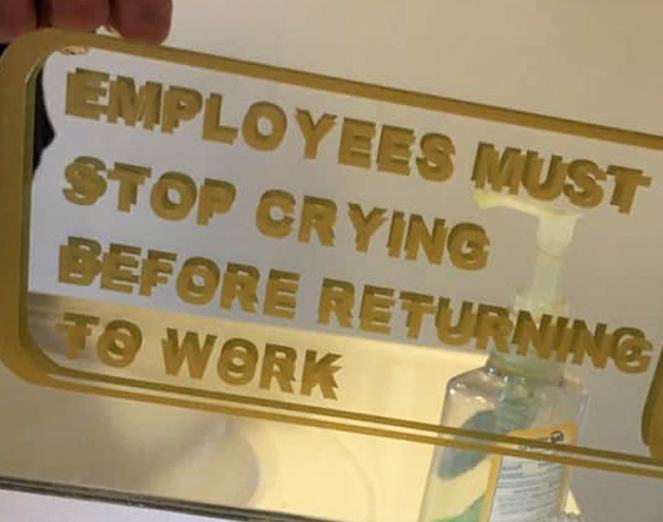








Or do one even better and stay silent while also threatening any media outlets that report the terms. Now you get weakness, confirmation, and lying all in one package with a ribbon bow on top.