

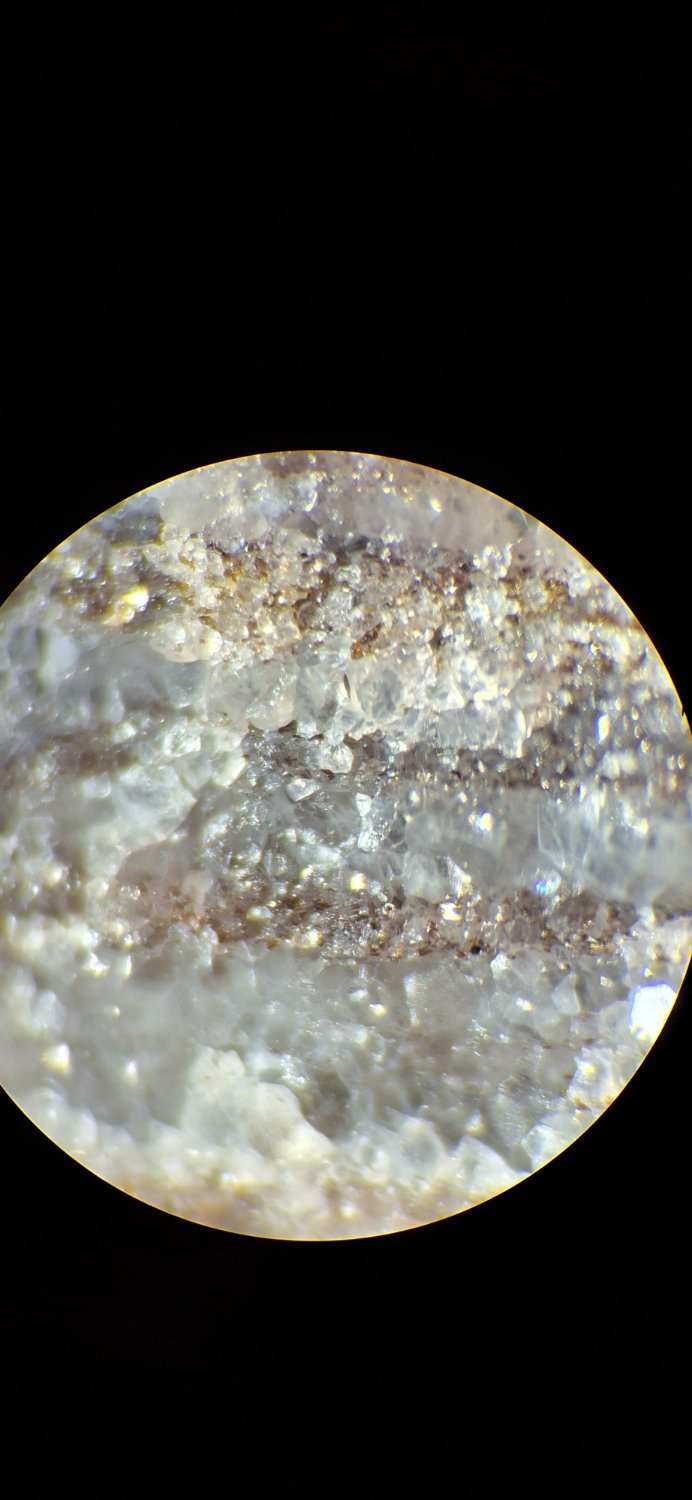
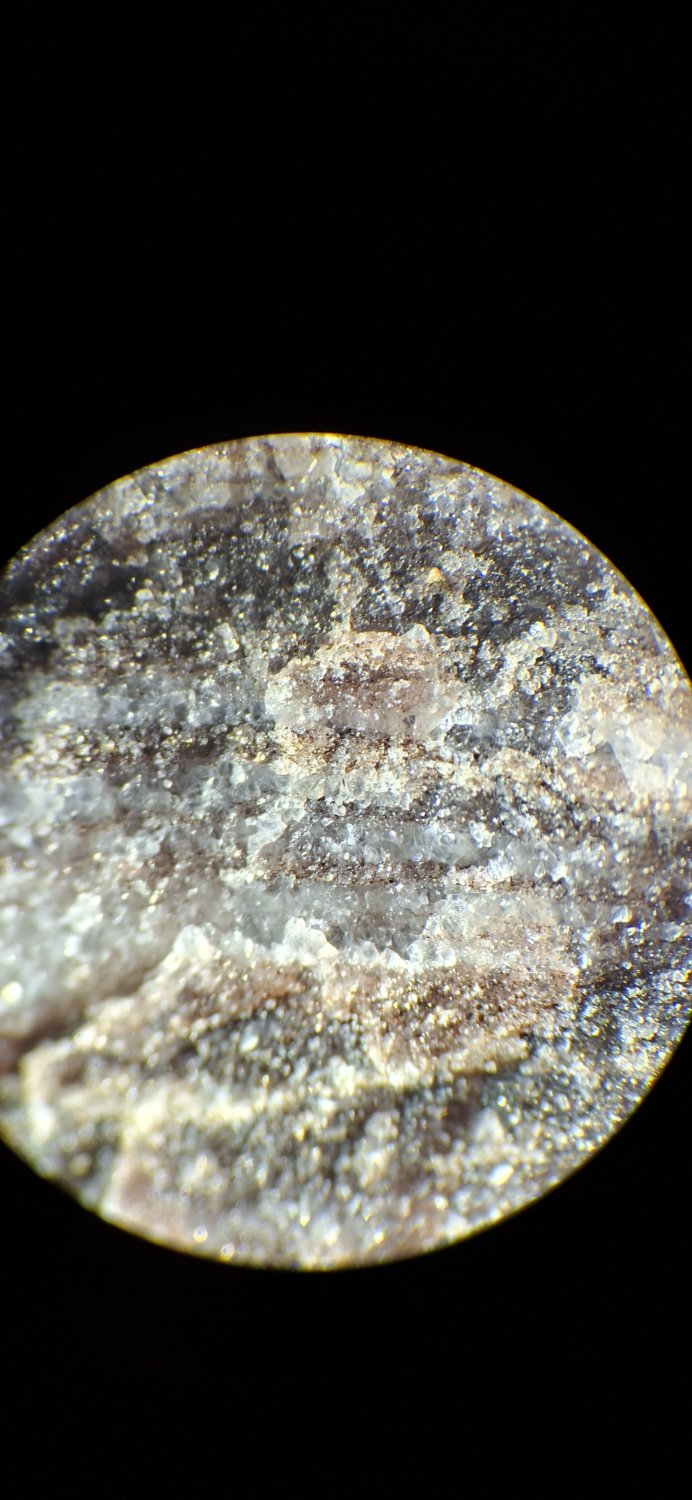
edit1: Some more photos of this selfsame rock through a micro scope (somewhere between 10x and 45x, didn’t write it down)


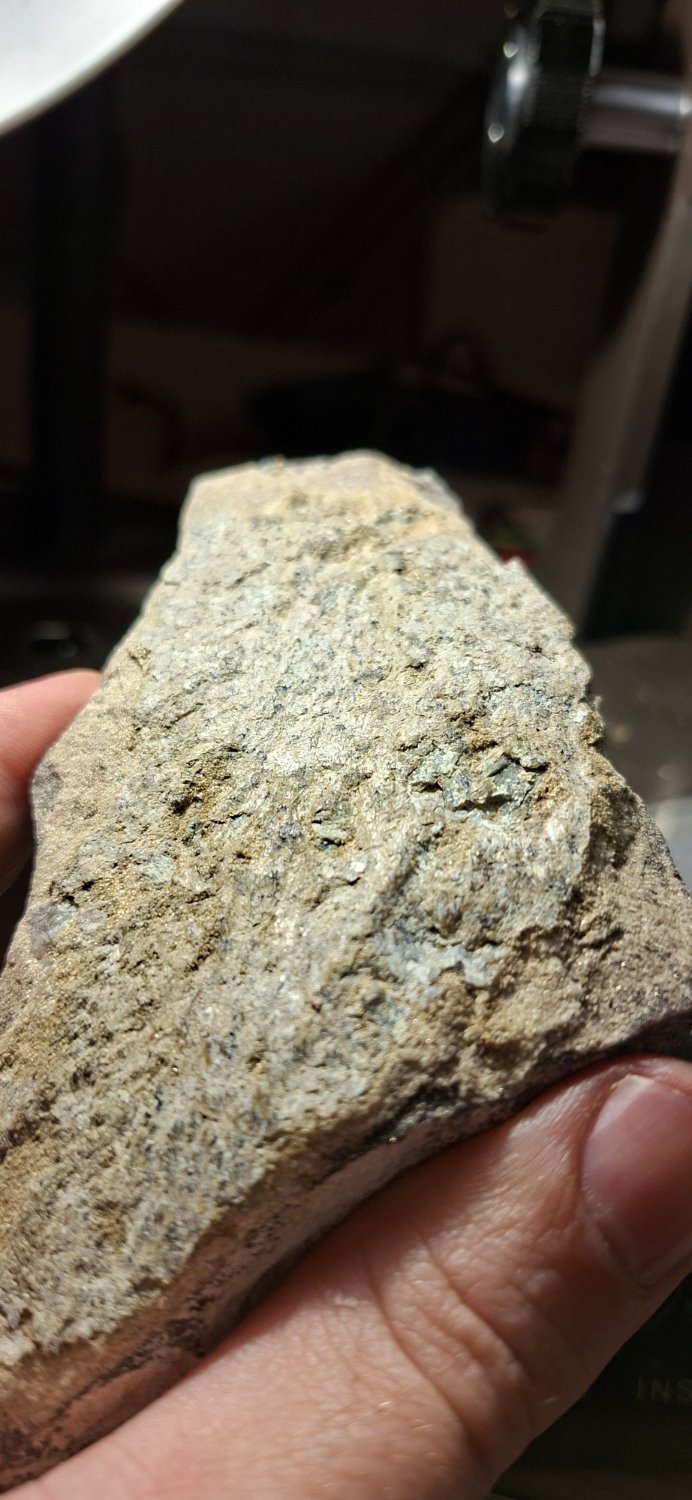
and another feature I discovered: the rock has a slickenside which i can’t really show on a photo. basically one of the sides is beat up into sand and polished. the whole rock unit was pretty beat up, so i’m not super suprised but it’s cool
edit2: ok i tried to capture the slickenside
Disclaimer: So, I am very interested in this topic but i am no petrologist or anything. So take everything I say with heaps of salt. But:
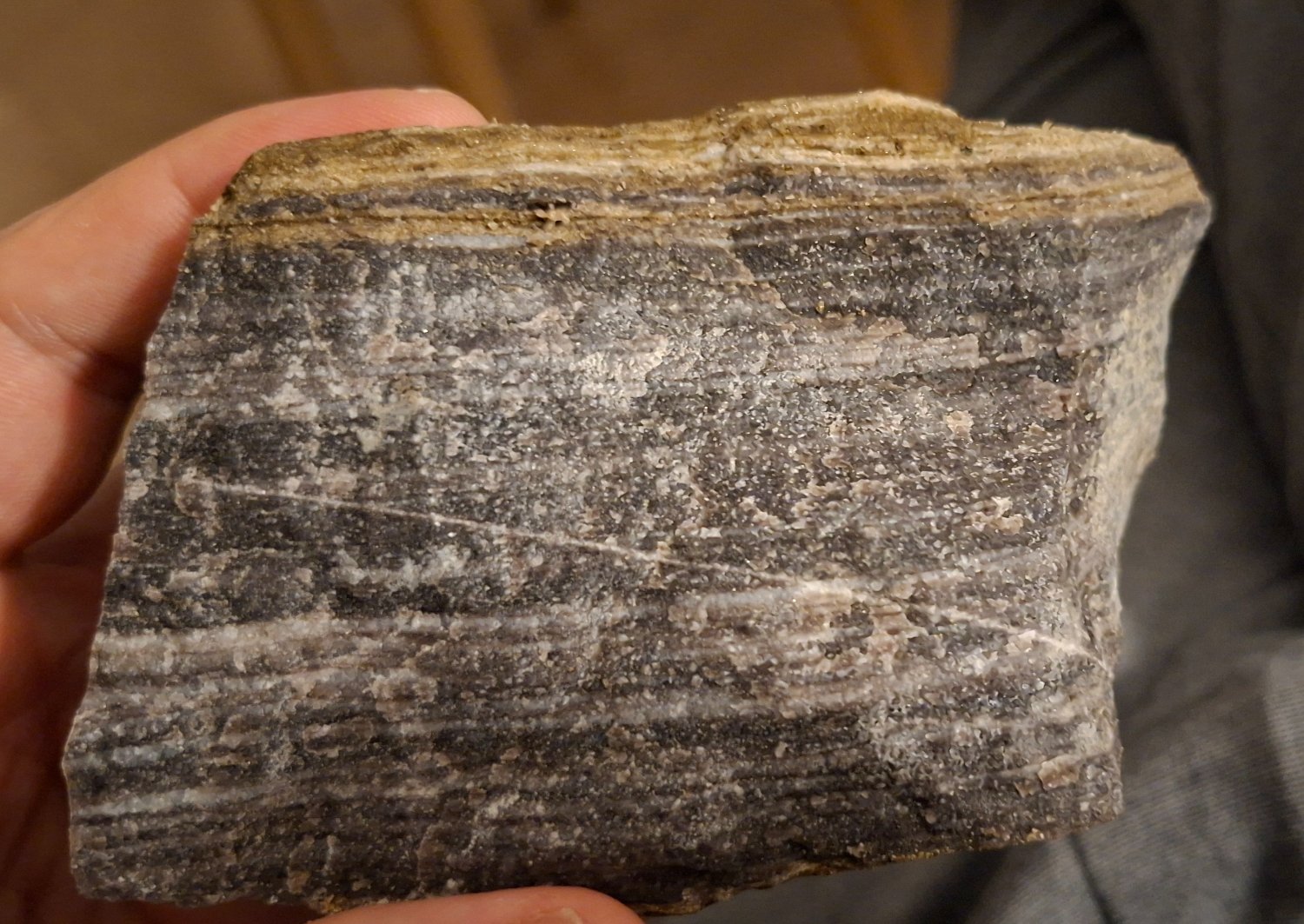
From what I understand though it’s different materials. Gneiss is highly metamorphosed, meaning subjected to high heat and/or high pressures. So the source rock (often granite) is squeezed and stretched and the discrete crystals stretch into this layers. It’s also pretty easy to see under any optical magnification, that there are different types of crystals and minerals in the different bands. At least to the untrained eye it looks like it.
That makes sense and it’s good to know. I’ll have to knowledge up on my rock facts.
Thanks!
i posted a few microscope pictures up top. what i neglected to mention is that the stretched crystals recrystalize, so single crystals won’t lock stretched under the microscope. but you can (maybe) see the white crystals, which is quartz, then some brownish stuff, which is either impure quartz or mica crystals, and some black platey stuff, which may be biotite mica
but please: see disclaimer in above post. i could be talking out of my ass
Damn, you brought your A game to this rock community. Those pics are fantastic.
what can i say? i do like rocks. ¯\_(ツ)_/¯
Yep. Quoting my geomorphologist family member here:
alright! sandstone then. it doesn’t have limestone though. nothing on that rock reacts to acid
Ah excellent! It’s likely my family member is just tugging my leg to counter the tired but gneiss pun.
the more i think of it the more i doubt the sandstone again. i found this in a bigger region of high grade metamorphic rocks (mostly amphibolite, granulite). the specific place is a quarry where they quarry serpentinite as gravel. the rock unit is extremely busted up and crumbles basically on light touch into fist and smaller sized chunks. this rock, whatever it is, formed in cracks between the serpentinite. also for a straight forward sandstone this has a lot of mica in it and there are bands of nearly pure mica. i need to see if i can make take a picture with the microscope tomorrow.
Well, I will be happy to relay the results to get the ubergeek response and report back. He loves his job.
great! thanks!