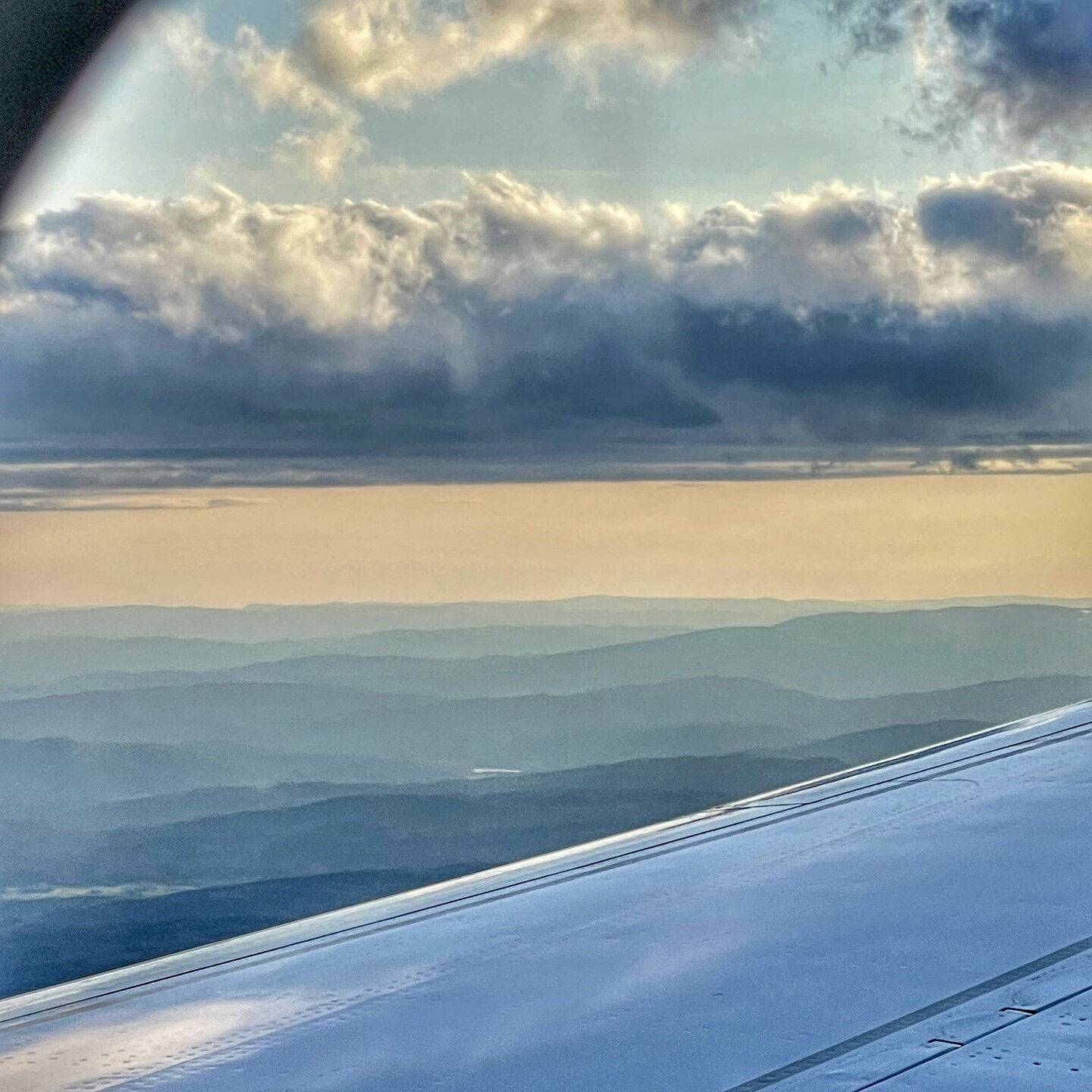
Reasonably often in Norwegian folktales, a great distance is described in terms of “bluings” (my coin; Norwegian: blåner). To a novice, this term may be confusing. But once in a while, the explanation is presented in nature.
I took this picture as we were flying into Oslo last night. I count up to nine bluings, which is even farther than the seven spoken of in the folktales.
#NorwegianFolktales #NorwegianLegends #Folklore @folklore @folklorethursday
You must log in or # to comment.
@SimonRoyHughes @folklore @folklorethursday
Nice - Wiktionary has the following definition for what appears to be the same word:blåne: mountains in the distance as seen by their bluish tint
It says this word can also be used as a verb ‘to bluen’ (which is a new English word to me, but it makes sense).
This suggests you could also translate the plural noun as ‘bluenings’ or ‘bluenings of the mountains’, since the Norwegian -ne appears to be equivalent to our -en.
https://en.m.wiktionary.org/wiki/bl%C3%A5ne#Norwegian_Nynorsk
@SimonRoyHughes @folklore @folklorethursday Beautiful picture and a wonderful way to measure distance.
In Scotland I heard this kind of horizon called the ‘landskein’, a name which has stuck with me although I think it is rarely known.
The best reference which comes to hand is "[Cambridge academic Robert Macfarlane] found ‘landskein’ being used on the Outer Hebrides and the definition he gives is “The weaving and braiding of horizon lines often seen most clearly on hazy days in hill country.”