Nice video! I was hoping you could provide some more context as to the bevel angle and what advantages/drawbacks there are with having such a large angle.
I know very little about straight razor shaving but I am getting interested and may have to try some day… Still need to finish learning the DE razor first I think.
Ok, here’s (probably) more than you want to know 🙂. An edge is made up of two (bevel) surfaces that come together (intersect) to form a line. This is almost always drawn as two lines that come together at a point (the apex) showing two sides of a triangle.
In cutting, you achieve more precision by narrowing that triangle; think about the difference between an axe and a scalpel.
We call the angle between the two sides the bevel angle. On a straight razor that angle is determined by the width of the spine and the height of the blade.
Generally speaking, smaller angles are better for shaving. Most straight razors that I’ve measured have a bevel angle between 15 and 18 degrees. The challenge I had with this razor, which had a bevel angle of 22 degrees, was, “how can I get it to shave well?”.
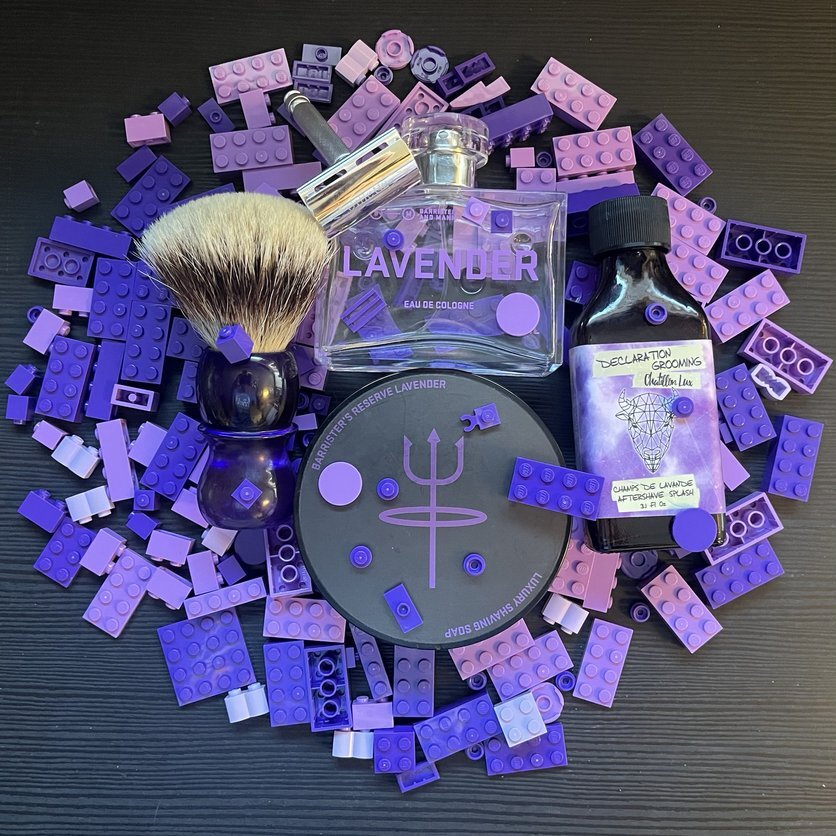
Wet shaving turns out to be a terrific hobby and there’s a whole world of safety razors (DE and SE), soaps, splashes, etc. to explore. Straight razors are another rabbit hole to go down within the hobby.

Nice video! I was hoping you could provide some more context as to the bevel angle and what advantages/drawbacks there are with having such a large angle.
I know very little about straight razor shaving but I am getting interested and may have to try some day… Still need to finish learning the DE razor first I think.
Ok, here’s (probably) more than you want to know 🙂. An edge is made up of two (bevel) surfaces that come together (intersect) to form a line. This is almost always drawn as two lines that come together at a point (the apex) showing two sides of a triangle.
In cutting, you achieve more precision by narrowing that triangle; think about the difference between an axe and a scalpel.
We call the angle between the two sides the bevel angle. On a straight razor that angle is determined by the width of the spine and the height of the blade.
Generally speaking, smaller angles are better for shaving. Most straight razors that I’ve measured have a bevel angle between 15 and 18 degrees. The challenge I had with this razor, which had a bevel angle of 22 degrees, was, “how can I get it to shave well?”.
Wet shaving turns out to be a terrific hobby and there’s a whole world of safety razors (DE and SE), soaps, splashes, etc. to explore. Straight razors are another rabbit hole to go down within the hobby.