
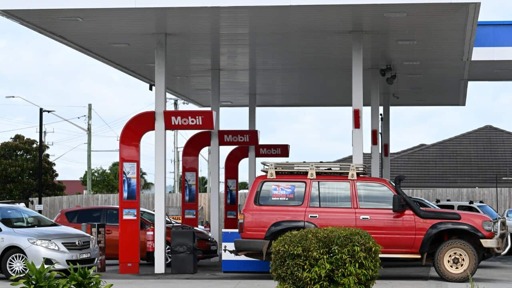
It’s half the price of regular unleaded, produced in Australia and comparably lower in emissions than petrol — yet the number of service stations offering LPG is dwindling across the country.
Before the rise of renewables and electric/battery, I thought LPG sounded pretty good:
- energy independence: we have huge reserves of this stuff
- less polluting than petrol, diesel, coal etc
- some good improving tech eg VPI, LPI, LPDI for cars (At one stage when I was looking at it, you could generate more power from some LPG systems than from petrol)
- every taxi couldn’t be wrong!
Now I’d rather go renewables, but if there’s any cases where dino juices are required, I still wonder if LPG is the best of the bad choices. Eg, if we HAVE to have an electric plant that’s not renewables, then wouldn’t LPG be better? And don’t mention nuclear, or I will go nuclear!
LPG and NLG are terrible compared to electric for most Australians.
Electric Heat Pump Hot water is more efficient than Gas hot water. Reverse cycle A/C is more efficient than NLG central heating. Induction cooking is more efficient than NLG cooking.
The main benefits in ICE vehicles over pure EV are ubiquity of fuel (even with the current restrictions - it is easier to fill with petrol than to charge an EV) and weight reduction. A petrol tank weighs almost nothing when it is empty and petrol is lighter than water, so only a bit more when full. A Lithium-Ion drive battery weighs the same whether it is charged or empty. Due to the reinforcement and regulator fittings, an LPG tank weighs less than a battery but much more than a petrol tank. Due to the fuel being compressed in the tank, it also weighs more than petrol. Even with an engine tuned specifically for LPG, it is not as efficient as Petrol by volume.
PHEV and EVs are more economical to run in short term. Performance EVs have unparalleled performance, but limited range and limited curb appeal. Soft-Hybrids strike the balance of traditional performance and expandable range. Petrol, Soft-Hybrids and PHEVs all have limitless range (as long as there are fuel stations).
LPGs are the worse of all options. They are more expensive to maintain, have limited range due to limited availability of fuel, weigh more than they should and provide an uninspiring driving experience.
One exception is for camp cooking.
Induction cooking at camp is very energy intensive and requires a very large battery array. More compact solutions like 12V ovens and kettles are OK in a vehicle, as long as the appliance is designed specifically for this application and is of suitable quality.
Isobutane in an thermally engineered pot like a Jetboil is the most weight-effective way to prepare hot drinks or water for freeze-dried hot meals.
For larger camping solutions, and for cold-weather camping, Propane in refillable bottles is best.
Those little canisters of isobutane and propane are not (legally) refillable, but are recyclable and if campers are more willing to cook over gas than wood, they are less likely to burn down half of the state.
It is volatile, unreliable to obtain (chances are you’re better off with an EV if you want to avoid petrol), contains less energy than petrol, and is a fossil fuel.
Ahhh we’re on the LPG conversion phase of the petrol crisis. Last time LPG was a lot more readily available though.
Seems a backwards step. The way forward is electric so why fluff around wasting money?
Gotta prop up the gas industry you see.
The propaganda has been so successful people don’t realise how terriblr cooking with gas is compared to induction.
Hell, I even prefer the glass top resistive electric, so much easier to clean than gas stoves.
Because very few cars are LPG. I worked at a gas station for several years and saw maybe 2 LPG cars
Service station or petrol station please, calling it gas is an Americanism
My apologies, I worked at a petrol station.
Most LPG cars I’ve ever encountered were Commodores and Falcons (both factory and aftermarket).
Even though now, more than ever, with the increased size of vehicles on the road (thanks to the massive uptick in US-style „trucks”) LPG conversions make sense on paper - there are a LOT of pain-points:
- Upfront cost of conversion is high
- Requires an additional fuel tank, taking up precious room in trays
- Difficult to find servos that still carry LPG
- Fuel capacity is lower, requiring fill ups more often - especially as usage rate is ~20% higher per 100km
- The rotting cabbage additives added to make leaks noticeable
- Connection can be a pain in the ass to screw on when filling up
- Reductions to torque and horsepower can make vehicles feel sluggish
I’m sure there are a bunch of other reasons I’m missing just off the top of my head.
Honestly, for people who live in other suburbia and can’t get by on public transport, a switch to a combination of pure EVs, PHEVs and/or hybrids where the engine is purely a generator would be a much better long-term solution.
Inability to park in underground parking lots. Or really most parking structures. I have seen lots of parking expressly forbid LPG due to it being heavier than air and a risk if it pools.
mate of mine converted his divvy to a hybrid. Doesn’t drive it as much now though as it’s now got heritage plates
Given how far EV batteries have come over the past decade alone, I’m surprised we don’t see more EV/Hybrid conversion kits available on the market.
They are available in other markets, but due to factors like the cost of labour in Australia, the cost of importing to Australia and the all investment capital is being tied up in property makes it unfeasible as a business.
Also the Right-Wing nut bags who are likely to firebomb any business that doesn’t align with the political views that are feed to them through corporate astroturf campaigns doesn’t help either.
Hybrids are very complicated mechanically, I’m not surprised hybrid conversions aren’t a thing.
EV conversions do exist, it’s just that they’re too expensive to be worthwhile. You mostly only see classic cars converted.
You pay $20,000 for the hardware, another $15,000 for mechanics to spend a week or two gutting and rebuilding your car and wind up with a car with a worn interior, suspension, steering, etc, no modern features and a short range for more than the price of a brand new long range EV.
If you want an EV, you’re much better off selling your car and buying a used EV.
I had an LPG car, fuck LPG. Improve cycling infrastructure.
Lol
Is there any station with LPG left? I have not seen any for ages.
The ones here have taken their LPG tanks out.
The Shell by the Brisbane Airport has lpg
In Adelaide it was only ever used by taxis. Nowadays many are hybrids or full electrics instead (especially in the case of ride share drivers) so no one really uses it.